
Paws Journal · Training · 7–9 min read
Dog training online can sound like two opposing camps shouting past each other: “force-free” on one side and “balanced” on the other. A 2026 study of professional trainers found real differences, but also one important point of agreement: trainers across approaches reported using positive reinforcement very frequently.
Reward-based approach
Build desired behaviour mainly through rewards, management and carefully designed practice while avoiding intentionally aversive methods.
Mixed or “balanced” approach
Uses rewards too, but may also include corrections or aversive consequences in some situations.
What the 2026 research found
The study interviewed 35 professional trainers from different methodological backgrounds. Both groups described positive reinforcement as a very common and effective tool. The disagreement was mainly about whether intentionally unpleasant consequences should ever be used and how trainers interpret the evidence around them.
That matters because the real-world debate is often presented too simply. “Balanced” does not mean “no rewards”, and “reward-based” does not mean “the dog can do whatever it wants”. Both can involve structure, rules and careful management.
Rewarding the right thing is more powerful than waiting for mistakes
If a dog jumps on visitors, many owners only react once the dog is already in the air. A more useful plan is to teach and reward an alternative behaviour — four paws on the floor, a sit, or going to a mat.
The same principle applies to lead pulling, door rushing and recall. Instead of making training a constant series of corrections, show the dog what earns success.
What about dangerous behaviour?
Safety comes first. Management is not a training failure. A long line, secure gate, basket muzzle, distance from triggers or controlled environment can prevent a mistake while training progresses.
For aggression, severe fear or a bite history, professional help is much more appropriate than copying a technique from a short video.
How to judge a trainer
A good trainer should be able to explain the plan without hiding behind vague words such as “respect” or “dominance”.
Look for body language, willingness to engage and whether the dog understands how to succeed.
Good training should leave the owner with skills, not just create a dramatic before-and-after moment.
Structure and kindness are not opposites
A dog can have clear boundaries without intimidation. We can prevent access to something, end play, use gates, practise impulse control and insist on safe routines while still building most learning through reinforcement.
Paws & Stays takeaway
Modern training is not about never saying “no”. It is about spending more time teaching the dog what to do instead — and using the least harmful effective method available.
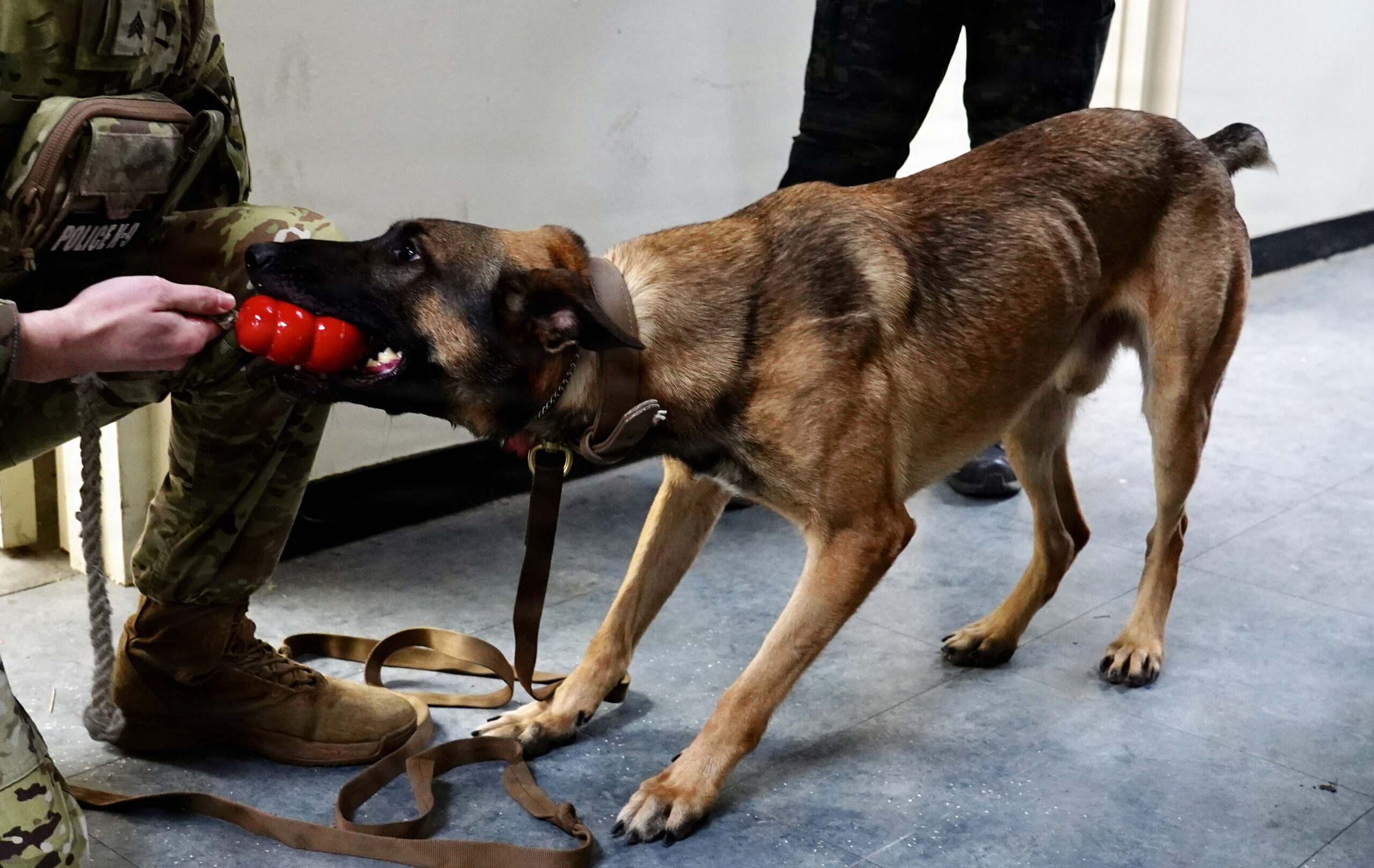
Source: DeLeeuw JL, Williams TJ. “Professional dog trainers’ perspectives on training methods: ethical and evidentiary insights.” Frontiers in Veterinary Science, 2026. Photo: U.S. military / Wikimedia Commons, public domain.