
Paws Journal · Wellbeing · 6–8 min read
“A tired dog is a good dog” sounds logical, but it can lead owners into an endless exercise race. Dogs need movement, of course. They also need opportunities to sniff, chew, search, solve problems, play and make choices. That is where enrichment comes in.
Exercise
Builds fitness, supports healthy weight and gives dogs an outlet for physical energy.
Enrichment
Lets dogs use natural behaviours such as sniffing, foraging, chewing, exploring, problem-solving and social interaction.
Why more exercise is not always the answer
If you respond to every burst of energy by adding longer runs, some dogs simply become fitter and need even more activity to feel physically tired. That is not necessarily a problem, but it can become a cycle.
Enrichment changes the type of challenge. Instead of asking the body to keep going, it gives the dog something meaningful to do.
The five everyday categories
AAHA highlights several forms of enrichment: physical, mental, sensory, social and food-based activities. In normal life they overlap. A slow sniff walk, for example, combines movement, scent and exploration. A food search combines eating, problem-solving and scent.
Simple ideas that cost almost nothing
Choose a safe route and let the dog decide when to stop and investigate.
Hide a few pieces of the dog’s meal around one room or scatter them outdoors.
Use safe cardboard and paper with treats hidden inside, under supervision.
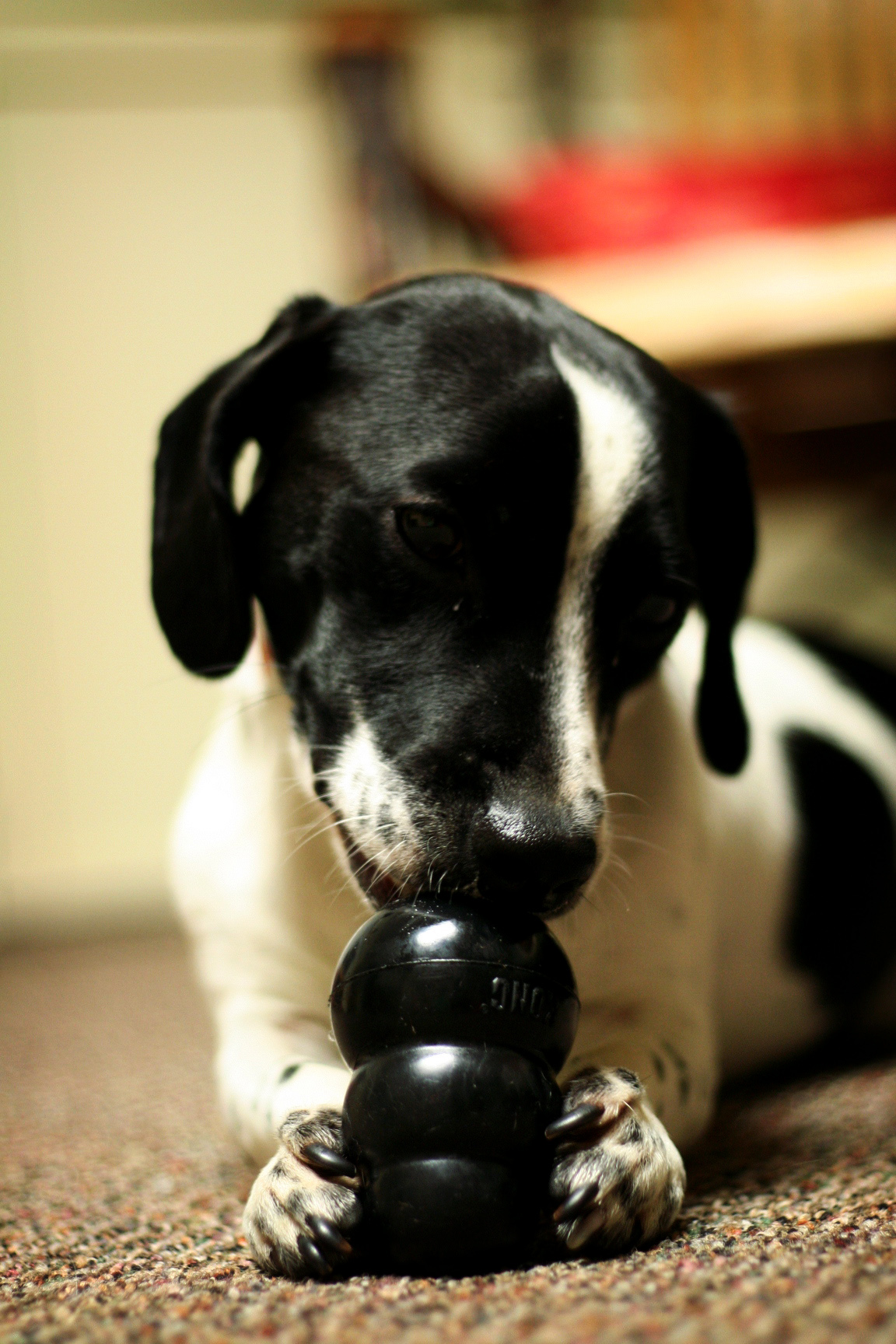
Offer a safe, appropriate chew and allow the dog to settle without constant interaction.
Does every dog need the same enrichment?
No. A scent hound may love tracking games. A retriever may prefer carrying and finding objects. A cautious dog may need very easy tasks that build confidence. A high-drive working dog may enjoy structured problem-solving. The activity should fit the individual, not a checklist from social media.
Rest is part of wellbeing too
Enrichment should not turn into constant entertainment. Dogs also need predictable rest and the ability to switch off. A dog that is occupied every waking minute may struggle to learn calmness.
Paws & Stays takeaway
A good dog day is not measured only in kilometres. Aim for a mix of movement, sniffing, thinking, social contact, chewing and genuine rest.
Source: American Animal Hospital Association (AAHA), “Enrichment: Supporting your pet’s mental and emotional wellbeing at home”, 2026. Photo: Ginny / Wikimedia Commons, CC BY-SA 2.0.